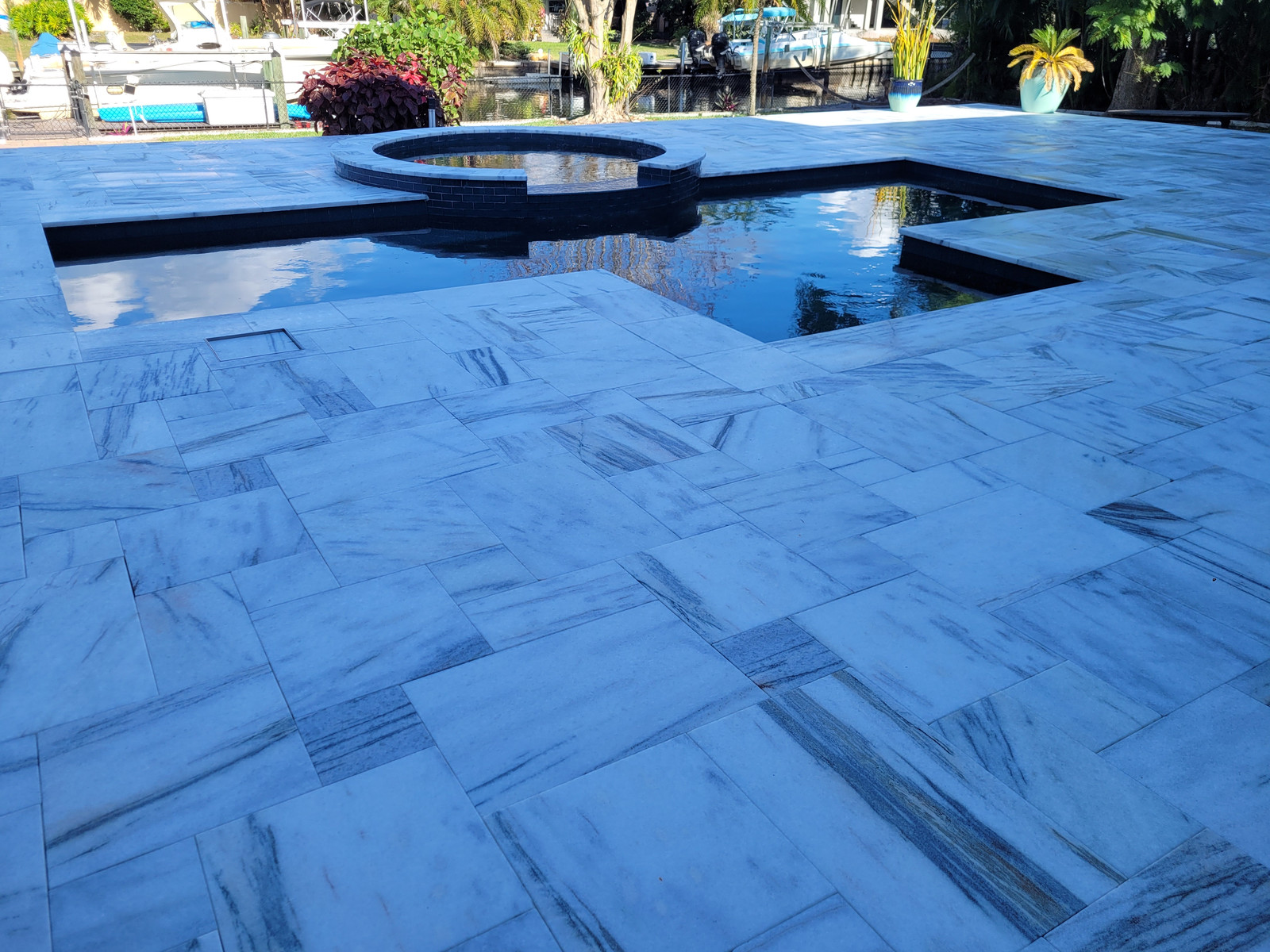
Pool water does not stay neatly inside the waterline. It lands on the deck, dries under the Florida sun, and leaves behind a concentrated mix of chlorine, salt, minerals, sunscreen, and body oils. Sealing a pool deck against chlorine starts with the surface itself – not with a quick coat of sealer over whatever is already there.
For homeowners in Lakewood Ranch, Bradenton, Sarasota, and nearby communities, the goal is usually twofold: preserve the clean, finished look of the outdoor living area and make future cleaning easier. The right sealer can help do both. The wrong product, or poor preparation, can leave a deck cloudy, slippery, blotchy, or prematurely peeling.
Why Chlorine Damages Pool Deck Surfaces
Chlorine is not usually the only culprit. On a busy pool deck, it works alongside repeated wet-dry cycles, intense UV exposure, rain, irrigation overspray, and residue from pool maintenance products. When pool water evaporates, dissolved materials remain on the surface. Over time, that residue can dull pavers, discolor natural stone, weaken older coatings, and settle into porous areas.
Brick pavers often show fading, whitening, and joint-sand loss around the pool perimeter. Travertine, marble, shellstone, limestone, and shell aggregate can absorb contaminants more readily if they are not properly protected. Natural stone also requires more care because an aggressive cleaner or incompatible sealer can alter its appearance.
A pool deck sealer is not a force field. It will not eliminate the need to rinse spills or balance pool chemistry. What it can do is reduce absorption, slow staining, improve cleanability, and provide a more controlled finish for a surface that receives daily exposure.
Inspect the Deck Before Sealing
A deck should be evaluated before any sealer is selected. This is where material-specific experience matters. A porous travertine deck needs a different approach than a concrete paver deck with decorative joint sand, and both differ from polished marble or shellstone.
Start by looking for active issues: white haze, peeling or flaking sealer, dark water spots, rust marks, irrigation staining, efflorescence, algae growth, loose pavers, cracked stone, and washed-out joints. If the surface already has a failing coating, applying another product over it may trap the problem underneath and make the appearance worse.
A simple water test can be helpful. Place a small amount of water on a clean, dry section of the deck. If it darkens the surface quickly, the material is absorbing moisture and may benefit from protection. If water beads but the deck looks hazy or uneven, an old sealer may still be present and should be assessed before recoating.
Clean First, Then Solve the Cause
The prep work determines whether a pool-deck sealing job lasts. Cleaning should remove chlorine residue, sunscreen film, mildew, dirt, and other buildup without damaging the surface or driving contaminants deeper into it.
Pressure washing alone is not always enough. A deck can look clean while still carrying residual salts, chemical film, or failed sealer in the pores. Depending on the material and condition, the process may require a surface-appropriate cleaner, controlled pressure washing, stain treatment, or sealer stripping. Natural stone should never be treated as if it were standard concrete.
For paver pool decks, cleaning may also reveal low or empty joints. Re-sanding is more than a cosmetic step. Proper joint sand helps stabilize the paver field, reduces movement, and limits places where debris and moisture can collect. Every Riverside paver job includes re-sanding the joints and removing efflorescence.
The cause of recurring marks should be addressed as well. For example, a white ring near a return jet may point to splash patterns or imbalanced pool water. Stains below a sprinkler head may be irrigation-related rather than chlorine-related. Sealing helps protect the deck, but it cannot correct ongoing water chemistry or equipment issues.
Choose the Right Sealer for the Material
There is no single best product for every pool deck. The best choice depends on porosity, previous coatings, desired appearance, drainage, traffic, and slip-resistance needs.
Brick Pavers and Concrete Pavers
Outdoor stone and pool decks get a natural or color-enhancing impregnating sealer. A natural finish is often a practical choice around pools because it keeps the surface closer to its original appearance and tends to hide everyday water spotting.
Color-enhancing sealers can bring faded pavers back to life without changing the natural look of the surface. Splash zones, wet feet, and direct sun should all influence the sealer selection. Every job is different, and traction around the pool is part of choosing the finish.
Travertine, Marble, and Other Natural Stone
Natural stone often benefits from breathable impregnating protection rather than a thick, topical coating. These products are designed to help limit moisture and contaminant absorption while preserving the stone’s natural character.
Travertine and shellstone can have open pores and natural voids that need careful cleaning before sealing. Marble may need a more conservative approach to avoid an artificial-looking finish. The right product can make routine cleanup easier, but it should not create a plastic-looking film or change the intended color beyond what the homeowner expects.
Why Florida Moisture Matters
Florida pool decks hold moisture in joints, stone pores and shaded corners long after they look dry. We check the surface before we seal, and we use specialized impregnating sealers made for Florida’s heat, sun and humidity.
Pay close attention to the pool coping, the waterline edge, drains, and transitions between materials. These areas receive frequent splash exposure and are where uneven coverage is easiest to notice. The pool equipment area may need separate stain treatment if chemical containers have leaked or left concentrated marks.
How Long Before You Use the Deck
Plan on about 4 to 6 hours before walking on the deck or setting out light chairs, 24 hours before heavy furniture goes back, and 72 hours before vehicles. Every job is different, so we’ll confirm the timing for your deck.
Maintain a Sealed Pool Deck Without Damaging It
Sealing reduces maintenance, but it does not replace it. Rinse away obvious chlorine splash and spills, especially near chemical storage areas. Use mild, surface-safe cleaners for routine washing, and avoid harsh acids or abrasive products unless they are specifically appropriate for the material and the issue being treated.
Keep an eye on high-use paths between the pool, spa, grill, and back door. These areas often show wear first. If water stops beading, color begins to fade unevenly, or stains are becoming harder to remove, the deck may be ready for professional cleaning and resealing. Reseal timing varies widely – exposed pavers may need attention sooner than protected natural stone, while a shaded lanai can age differently from an open pool surround.
A pool deck should look cared for without becoming difficult to live on. If you are deciding between a natural finish and a color-enhancing one, or dealing with white haze, fading, or chlorine residue, send a few photos for a written quote. A clear view of the material, condition, and pool area makes it easier to recommend a sealer that fits the home, the community, and the way the deck is actually used.
Chlorine wear on stone decks is a common reason people call us in Lakewood Ranch and Bradenton. See also marble paver sealing.
For more on the stone itself, see our Marble Sealing, Travertine Sealing, and Natural Stone Care pages. Call (813) 406-0399, or get a free estimate at https://www.riversideseal.com/free-estimate/.
Leave a Reply