
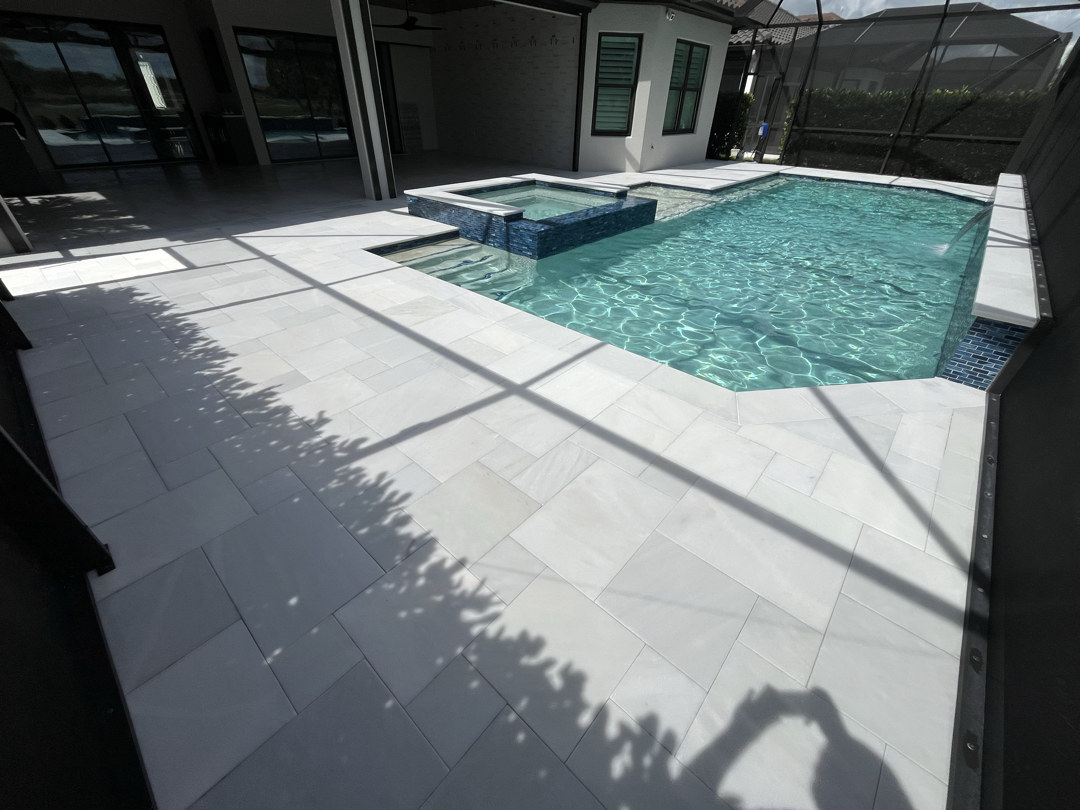
A marble pool deck can look bright and refined one season, then start showing dull traffic paths, irrigation marks, leaf tannins, and poolside residue the next. The marble paver sealing Bradenton homeowners choose should address those conditions without making natural stone look plastic, overly dark, or unsafe around the pool.
Marble is not brick paver. It is a porous natural stone with variations in density, finish, and color from one piece to the next. A sealing job that works well on a concrete paver driveway may be the wrong choice for tumbled marble, honed marble, or a marble lanai. The result depends on careful cleaning, realistic stain treatment, proper dry time, and a sealer selected for the stone and the way the space is used.
Why Bradenton Marble Needs Specialized Care
Southwest Florida weather puts outdoor marble through a lot. UV exposure can fade or alter the appearance of some coatings. Heavy rain can carry soil and organic debris across the surface. Irrigation water may leave mineral spotting or rust-colored stains, especially along deck edges and walkways. Around pools, sunscreen, body oils, salt, and chemical splash-out can collect in areas that receive the most foot traffic.
Many marble decks are also installed near screened lanais, landscaping, and pools, where shade and moisture can encourage algae or mildew. The stone may not look dramatically dirty from a distance, but it can lose its even color and clean texture over time.
Sealing does not make marble maintenance-free. It does, however, reduce how quickly liquids and contaminants absorb into the stone. A properly selected impregnating sealer treatment can make routine cleanup easier while preserving the natural look homeowners chose in the first place.
The Right Process for Marble Paver Sealing in Bradenton
The sealer is only one part of the job. Applying a quality product over residue, moisture, failed coating, or untreated staining can lock in the very problems a homeowner is trying to correct.
Start with a controlled cleaning
Marble needs cleaning methods that match its condition. Surface dirt, algae, and loose debris need to be removed without aggressively scarring the stone or blowing out surrounding joint material. Excessive pressure, the wrong cleaner, or a rushed approach can leave visible wand marks, etching, or uneven areas that become more obvious after sealing.
Cleaning also reveals the true condition of the deck. What looked like general discoloration may be an old sealer turning cloudy, a mineral deposit from irrigation, a rust stain from furniture, or absorbed organic staining beneath planters. Each calls for a different response.
Address stains before sealing
Not every stain can be fully erased, particularly if it has been sitting in porous stone for a long time. Still, targeted treatment often improves the appearance significantly. Mineral deposits, organic marks, rust staining, and old chemical residue should be evaluated before any protective finish is applied.
This is where material-specific experience matters. Marble can react poorly to harsh acidic products that might be used casually on other exterior surfaces. The goal is to remove contamination while protecting the stone’s finish and avoiding unnecessary color change.
Allow the stone to dry fully
Florida humidity makes dry time more than a scheduling detail. Marble and its joints need adequate time to release moisture after cleaning and stain treatment. If a topical product is applied too soon, trapped moisture can contribute to haze, whitening, or adhesion problems.
Drying time depends on weather, shade, stone density, drainage, and whether the deck is enclosed. A sunny open patio may dry differently than a shaded lanai with limited airflow. This is one reason a quick clean-and-seal service can create disappointing results later.
Choose a finish that suits the surface
For many marble pool decks and lanais, a natural-look impregnating sealer is the practical choice. It helps protect the stone without creating a noticeable film or an artificial shine. This approach is especially useful when homeowners want to retain the existing color and texture of tumbled or honed marble.
An enhancing sealer can deepen color and bring out natural variation, but it should be used with care. The change may be attractive on some stone and too dark on another. A sample area is often the best way to avoid surprises.
Higher-sheen finishes can make sense on certain hardscape materials, but they are not automatically the best option for marble around water. More shine can also mean a more noticeable coating, more maintenance when it wears unevenly, and potential traction concerns. The right answer depends on the stone, drainage, sunlight, and how the family uses the deck.
Common Problems Homeowners See After a Bad Seal
A marble deck should not be left with a milky film, roller lines, sticky spots, or patchy sheen. Those issues are often tied to incompatible products, overapplication, trapped moisture, or a previous coating that was not properly removed.
Whitening is a common concern after rain or high humidity. Sometimes the problem is moisture beneath a film-forming sealer. Other times it is residue on the surface, sealer failure, or an application that was too heavy. The correction is not always as simple as applying another coat. In fact, adding more product can make the appearance worse.
Slipperiness is another issue worth addressing before work begins. A film-forming finish may look appealing in a small test area, but a pool deck has to function safely when bare feet, splashing water, and sunscreen are part of daily life. Natural texture and a lower-build protective treatment are often better suited to that setting.
How Long Does Sealed Marble Last?
There is no single calendar answer. A covered lanai that receives light foot traffic will generally hold protection longer than a sun-exposed pool deck with frequent use. Irrigation overspray, salt exposure, cleaning habits, and the type of sealer all matter.
Rather than resealing on a fixed schedule, watch how the surface behaves. If water quickly darkens the stone instead of beading or remaining near the surface, protection may be wearing down. Increased staining, a dull appearance in traffic lanes, or difficult cleanup are also signs that it is time to assess the deck.
For many residential marble surfaces, periodic professional cleaning and an inspection every few years is more useful than waiting until the stone looks severely neglected. Early maintenance is usually simpler than correcting embedded stains or failed coatings.
What to Ask Before Hiring a Marble Sealing Contractor
A homeowner should be able to get clear answers about cleaning methods, stain treatment, dry time, sealer type, expected finish, and how the product will perform near a pool. Ask whether the contractor works specifically with natural stone, not only brick pavers. It is also reasonable to ask whether a natural or color-enhancing impregnating sealer is being proposed and why.
Photos help establish the starting condition, but an on-site review may be needed when there is widespread haze, old sealer failure, deep staining, or suspected etching. A written quote should identify the preparation work and finish being recommended rather than simply promising to pressure wash and seal.
Riverside Paver Sealing works with Bradenton-area homeowners who want that material-specific approach, including cleaning, restoration, stain evaluation, and impregnating sealing for natural-stone outdoor areas.
Your marble does not need a shiny coating to look cared for. A clean, even, naturally finished deck that is easier to maintain and comfortable to use is often the best result. Send a few photos of the surface, the problem areas, and the surrounding pool or lanai so the condition can be evaluated before the wrong product is put on the stone. Call (813) 406-0399, or request a free written estimate at https://www.riversideseal.com/free-estimate/.
See also our Marble Sealing, Travertine Sealing, and Natural Stone Care pages for how we treat outdoor stone.
That Bradenton work sits with our marble paver sealing service and nearby Lakewood Ranch page.
Leave a Reply