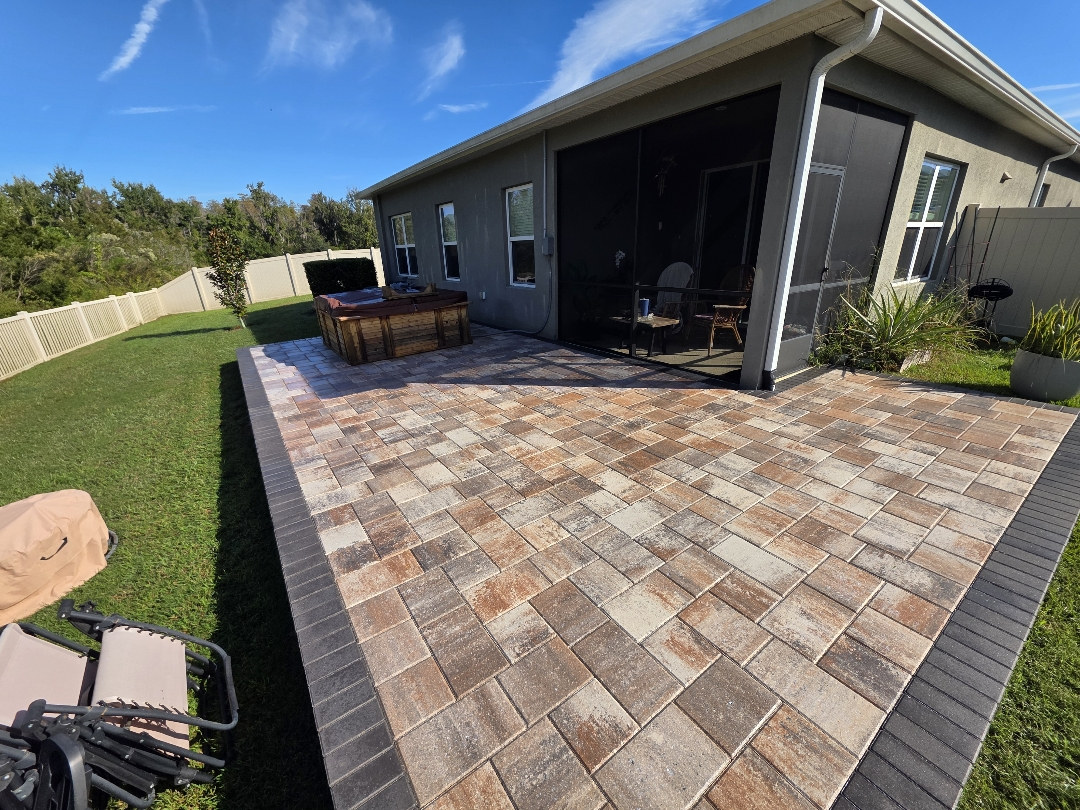
A paver driveway can look freshly installed after a proper cleaning and sealing, then start losing color and joint sand faster than expected under a Southwest Florida summer. For homeowners asking how often to reseal pavers in Florida, the practical answer is usually every two to three years. But the calendar alone should not decide the job. Sun exposure, irrigation, pool water, traffic, drainage, and the type of sealer already on the surface can all move that schedule forward or back.
A well-maintained, covered lanai may hold its finish longer than an unshaded driveway in Lakewood Ranch or Bradenton. A pool deck exposed to splash-out and chemical residue may need attention sooner, even if it still looks reasonably clean. The goal is not to apply sealer on a fixed anniversary. It is to restore and protect the pavers before fading, staining, sand loss, or sealer failure becomes a larger repair.
How Often to Reseal Pavers in Florida
Most brick paver driveways, walkways, patios, and pool decks in Florida benefit from professional cleaning, re-sanding, and resealing every two to three years. Some surfaces can go closer to four years when they receive limited sun, have excellent drainage, and were sealed with a high-quality, compatible product.
On the other hand, heavily used driveways and fully exposed patios may be ready in 18 to 24 months. This is common where irrigation regularly hits the surface, oak debris sits after storms, or vehicles track dirt and tire marks across the same areas every day. The Florida climate is hard on exterior finishes. UV exposure breaks down color enhancement, frequent rain moves joint sand, and humidity encourages organic growth in shaded areas.
Resealing too late can leave pavers looking dry, faded, and uneven. Resealing too early can also create problems if the old coating is still sound or if incompatible sealer is placed over it. A surface should be evaluated for its condition, not simply coated again because two years have passed.
Signs Your Pavers Are Ready for Service
The clearest signal is usually visual. Pavers that once had richer color may begin to look chalky, pale, or blotchy. Water may soak in immediately instead of beading on the surface. Joint sand can sit low between the pavers, allowing movement, weed growth, and ants to become more likely.
Look closely after a rain or while rinsing the driveway. If some areas darken quickly while others remain protected, the existing sealer may be wearing unevenly. That does not always mean every bit of old sealer must be stripped, but it does mean the surface needs a professional assessment before a new application.
Other common signs include:
- Fading on sun-exposed sections while shaded areas remain darker
- Sand loss or open joints between pavers
- Irrigation rust, mineral deposits, leaf stains, or tire marks that no longer clean easily
- Dullness around a pool deck caused by splash-out or chemical residue
- A white, cloudy, or hazy appearance that may indicate moisture or sealer failure
White haze deserves special attention. It is not always dirt, and applying more sealer over a cloudy surface can make the appearance worse. Moisture trapped beneath a coating, improper product selection, poor surface preparation, or an old failing sealer can all contribute. The right correction depends on what is actually happening at the surface.
What Makes Florida Sealer Wear Faster?
Florida sunlight is the biggest factor. On an open driveway, intense UV exposure gradually breaks down the finish and reduces the color-enhancing effect many homeowners prefer. The pavers themselves can remain structurally sound while the protective layer becomes less effective.
Water is another major factor, especially when it is not draining correctly. Afternoon storms, runoff from roof lines, and irrigation overspray carry minerals and contaminants across the pavers. In Sarasota, Venice, Parrish, and nearby communities, irrigation staining is especially noticeable on lighter pavers and natural stone. Repeated moisture also washes joint sand away over time.
Pool decks face their own conditions. Chlorine or saltwater splash-out, sunscreen, food spills, and wet foot traffic can affect both the appearance and performance of a sealer. A pool deck should be sealed with safety and finish expectations in mind. A high-shine look may be appealing on a driveway, but a pool deck or other wet walking surface needs traction more than a high-shine finish.
Traffic matters as well. A driveway with multiple vehicles, golf carts, delivery traffic, and frequent turning will wear differently from a decorative walkway. Areas around garage doors, parking spots, and turn-in points often show early dullness because tires and abrasion work against the sealer.
The Right Resealing Process Matters More Than the Date
A good resealing job starts with cleaning and inspection, not with a bucket of sealer. Dirt, mildew, old joint sand, irrigation staining, and residue need to be addressed before any new finish goes down. If the surface is not properly cleaned and allowed to dry, the finished appearance can be uneven and the sealer may not bond as intended.
For brick pavers, the process often includes pressure washing, restoring the joints with appropriate sand, and applying a compatible sealer once the surface is dry. On brick pavers, a two-part urethane can be kept more natural or more enhanced, depending on the pavers, the existing coating, and the look the homeowner wants. Outdoor natural stone gets a natural or color-enhancing impregnating sealer, not a film coating. In communities with architectural standards, matching the look your neighborhood prefers can matter just as much as the protection itself.
Not every hardscape should be treated like brick pavers. Travertine, marble, limestone, shellstone, and shell aggregate are porous materials with different cleaning and protection needs. Natural stone may benefit from an impregnating sealer that protects without creating an artificial-looking film. Using the wrong coating can alter the stone’s appearance, trap moisture, or create a finish that does not suit the surface.
That is why a low-price, one-product approach can become expensive later. The product needs to match the material, the existing sealer, the location, and the desired finish.
Can You Wait Until the Pavers Look Bad?
You can, but it is usually not the most cost-effective choice. Once joint sand is badly depleted, stains have settled in, or a coating has turned cloudy, preparation becomes more involved. A driveway may need deeper cleaning, stain treatment, stripping, or restoration before it can be sealed correctly.
There is a middle ground between resealing too frequently and waiting for visible failure. Check the surface twice a year, ideally after the rainy season and again before the busiest outdoor months. Watch the exposed sections, the areas near sprinklers, and the spots where water tends to collect. Those locations usually show the earliest clues.
Simple maintenance also helps extend the life of a professional sealer application. Blow leaves and debris off regularly, rinse away fresh spills, keep irrigation aimed away from hardscapes where possible, and avoid harsh chemicals that can damage the coating. Pressure washing can be useful, but excessive pressure or poor technique can remove joint sand and scar softer materials.
A Practical Schedule for Southwest Florida Homes
For most homes, plan on an inspection around the two-year mark and expect resealing somewhere between years two and three. If your driveway is fading quickly, the pool deck has lost sand, or water no longer behaves consistently across the surface, schedule an evaluation earlier.
If the surface still looks even, joints are full, and the sealer is performing well, there may be no reason to rush. A knowledgeable contractor can determine whether the pavers need a full restoration and reseal or simply routine cleaning and minor maintenance.
Riverside Paver Sealing evaluates the material, existing finish, and visible problem areas before recommending a service. Sending a few photos is often enough to start the conversation and receive a written quote, especially when the concern is fading, whitening, stain buildup, or sand loss.
Your pavers are part of the first impression of your home and the outdoor spaces you use every week. Addressing wear while it is still manageable keeps the work focused on protection and appearance, rather than a more involved recovery project. Call (813) 406-0399, or request a free written estimate at https://www.riversideseal.com/free-estimate/.
If the surface is marble, travertine or another natural stone rather than brick or concrete pavers, see our Marble Sealing, Travertine Sealing, and Natural Stone Care pages.
We also have a short south-area note on this: How often should pavers be resealed in Florida.
Leave a Reply