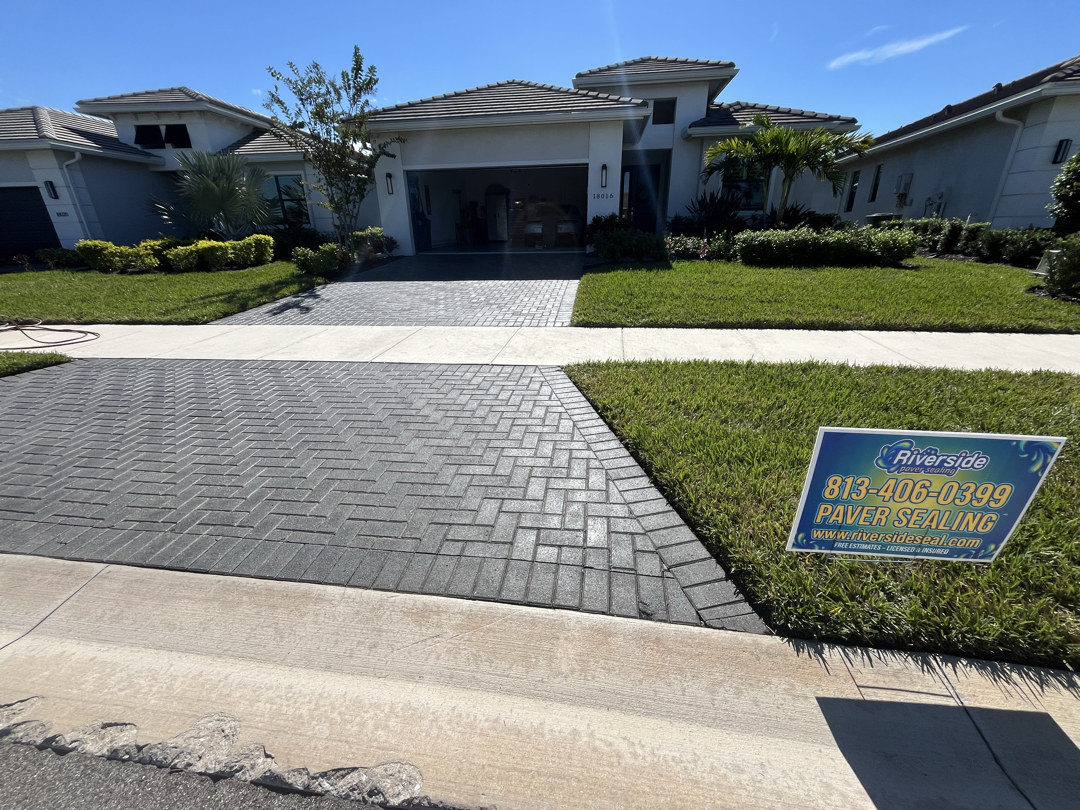
A paver driveway can look excellent one week and develop a cloudy, milky film the next. When paver sealer turning white becomes visible, it is usually not a simple surface-cleaning issue. The white haze may be trapped moisture, a failed sealer film, mineral deposits, or a compatibility problem from an earlier application. The right correction depends on identifying which one you are looking at before anyone applies more sealer.
For homeowners in Lakewood Ranch, Bradenton, Sarasota, and nearby Southwest Florida communities, this is a common concern after summer rain, irrigation cycles, pool use, or a rushed sealing job. Florida pavers endure intense UV, high humidity, afternoon storms, and chemical residue that can expose weaknesses in a sealer system quickly.
What Does White Haze on Sealed Pavers Mean?
A sealer is meant to enhance color, protect porous surfaces, and make routine cleaning easier. But some sealers form a film near the surface. If moisture becomes trapped below that film, or if the product does not bond properly, light reflects through the coating differently. The result is often a white, gray, or cloudy appearance called blushing.
The haze may cover broad areas of a driveway, appear in isolated patches, or show up most heavily along edges and low spots. It can look worse after rain or irrigation and then seem to improve slightly once the surface dries. That pattern is a useful clue, but it does not confirm the cause on its own.
White material can also be efflorescence, which is a mineral salt deposit moving out of concrete, pavers, or mortar. Efflorescence tends to sit on the surface rather than appear inside a clear coating. A professional inspection or a small test area can distinguish mineral buildup from a failed sealer, which matters because the solutions are very different.
The Most Common Reasons Paver Sealer Turns White
Moisture was trapped under the sealer
This is one of the most frequent causes in Southwest Florida. Pavers may look dry at the surface after cleaning, but moisture can remain in the pores, joints, bedding sand, or concrete base below. Applying a film-forming sealer too soon can lock that moisture in place.
A storm that hits a fresh coat, or heavy dew overnight, can cause the same haze. Every job is different, so we pick the day with you. Pool decks and lanais may be especially challenging because shaded areas dry slowly and pool water can migrate across the surface.
The sealer was applied too heavily
More sealer does not equal more protection. Thick applications can dry unevenly, remain soft beneath the top layer, and develop a cloudy look as the coating ages. This is especially common with film-forming finishes, where excess product can collect in low spots, along paver edges, and near borders.
A proper application is based on the material’s absorption rate and the desired finish. Older, dry brick pavers often absorb differently than dense concrete pavers, travertine, or shellstone. A single approach for every surface can create problems.
The new product was not compatible with the old one
Not all sealers bond to one another. A water-based coating applied over a solvent-based acrylic, or a new topical sealer placed over a worn urethane or unknown prior product, can fail to adhere correctly. The surface may turn hazy immediately or develop whitening weeks later.
This is why a clear driveway is not automatically ready for resealing. It is necessary to know what is already on the pavers, how much remains, and whether the new sealer is compatible. If the existing coating is failing, cleaning alone may not provide a sound surface for another coat.
Poor cleaning or incomplete surface preparation
Irrigation overspray, fertilizer residue, mildew, tire marks, oils, and fine dust all interfere with adhesion. If contaminants are sealed in, they can create blotchy areas that look white, dull, or gray. Joint sand also needs to be stable and sufficiently dry before sealing. Freshly installed or heavily saturated sand can hold moisture where it is least wanted.
On pool decks, residue from chlorine, salt systems, sunscreen, and outdoor furniture can add another layer of complexity. Natural stone requires even more care. An aggressive cleaner or unsuitable sealer on travertine, marble, limestone, or shellstone can change the appearance of the material instead of protecting it.
The coating has reached the end of its service life
Even a correctly applied sealer does not last forever. Florida sun slowly breaks down many coatings. Traffic, pressure washing, pool chemicals, and standing water add wear. As a film ages, it may lose clarity, become brittle, or release from the surface in milky patches.
In this situation, adding a fresh coat is usually a temporary cosmetic cover at best. It can make the whitening worse and make eventual restoration more difficult.
Can a White Paver Sealer Be Fixed Without Stripping?
Sometimes, but only in limited situations. A newly applied solvent-based acrylic sealer with minor blushing may respond to a controlled re-emulsification treatment by a qualified contractor. The process can allow trapped moisture to escape and help the sealer level back out. It is not a universal fix, and it should not be attempted casually with random solvents from a hardware store.
If the haze is actually efflorescence on top of an intact sealer, targeted cleaning may resolve the issue. The product and method must be appropriate for the paver type and surrounding landscape. Acidic cleaners can damage certain natural stones and may etch or discolor nearby surfaces.
When the coating is thick, peeling, incompatible, or whitened throughout, stripping is often the honest answer. That process removes the failing sealer so the pavers can be cleaned, allowed to dry properly, re-sanded where needed, and sealed with a compatible product. It requires more labor than simply applying another coat, but it gives the new finish a reliable foundation.
What Homeowners Should Avoid
Do not apply another coat of sealer over a white haze just to make it disappear. That can trap more moisture and create a thicker, more expensive failure. Avoid using harsh acids, paint thinner, or high-pressure washing without knowing whether the problem is sealer failure, mineral deposits, or a sensitive stone surface.
It is also wise not to judge the condition immediately after a rainstorm. Take photos when the pavers are dry, then take another set after rain or irrigation if the cloudiness changes. Those images can help show whether moisture is contributing to the problem.
If the white areas are near a pool, check for recurring water exposure, leaking planters, irrigation heads aimed at the deck, or drainage that leaves water standing against the pavers. A good restoration can still fail if the moisture source remains in place.
Preventing Whitening During Future Sealing
Prevention starts with preparation, not the final coat. The surface needs to be thoroughly cleaned, free of residues, and given enough drying time for the weather and material. In humid Florida conditions, that window should be based on actual site conditions rather than a rushed calendar date.
The sealer should match the surface and the homeowner’s expectations. Natural stone gets a natural or color-enhancing impregnating sealer only. Brick pavers, travertine, marble, and shell aggregate do not all need the same chemistry. Impregnating sealers can be preferable where maintaining the natural texture and reducing film-related issues is the priority.
Application matters just as much as product selection. Even coats, controlled coverage rates, attention to low areas, and weather-aware scheduling reduce the risk of haze. The goal is a finish that looks intentional, not one that leaves the surface slippery, overly shiny, or vulnerable to whitening after the next storm.
When to Request a Professional Assessment
A few photos can often provide a useful first read, especially if you include a wide view of the driveway or deck, close-ups of the haze, and images taken after the surface is dry. It also helps to share when the pavers were last sealed, whether the product is known, and whether the whitening appeared after rain, pressure washing, or pool work.
Riverside Paver Sealing evaluates the material, existing finish, moisture exposure, and desired appearance before recommending cleaning, stripping, sanding, restoration, or resealing. That matters on a brick paver driveway and even more on a travertine or marble pool deck, where the wrong correction can permanently change the surface.
A white sealer does not always mean the pavers themselves are damaged. With a careful diagnosis and the right repair path, many Florida driveways, patios, lanais, and pool decks can return to a clean, even finish that suits the home and the community around it. Call (813) 406-0399, or request a free written estimate at https://www.riversideseal.com/free-estimate/.
If the haze is on marble, travertine or other natural stone, start with our Marble Sealing, Travertine Sealing, and Natural Stone Care pages.
The south-area version of this question is here: Why is my sealed paver driveway turning white.
Leave a Reply