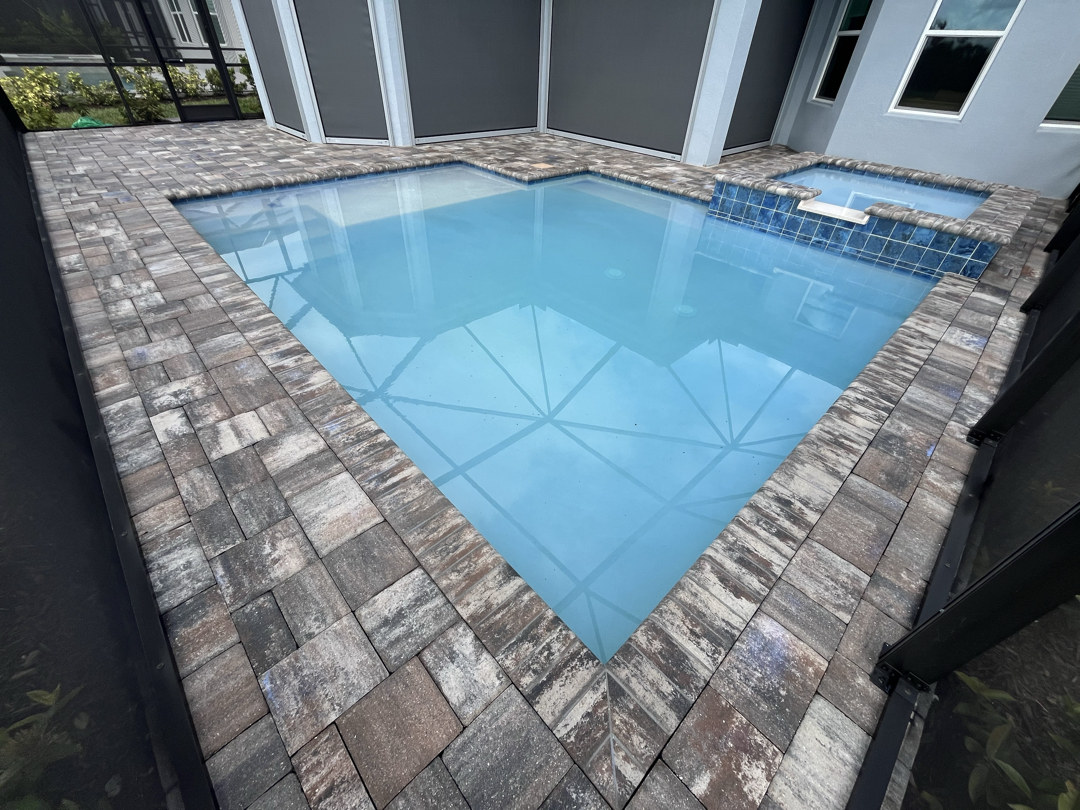
A Lakewood Ranch driveway can look tired long before the pavers themselves are worn out. Florida UV, afternoon rain, irrigation overspray, and everyday vehicle traffic gradually pull color from brick pavers and wash joint sand away. Lakewood Ranch paver sealing is not simply about making a surface shiny again. Done correctly, it is a restoration process that cleans the material, stabilizes the joints, and applies a finish suited to the paver, the location, and the look your home and community prefer.
For many homeowners, the best result is a driveway, walkway, lanai, or pool deck that looks clean and cared for without appearing overly coated. Getting there requires more than pressure washing and a can of sealer.
What Florida Weather Does to Pavers
Brick pavers are durable, but they are porous. Moisture and contaminants can work into the surface, while sun exposure fades pigments and weakens older coatings. During storm season, driving rain can move sand out of the joints. On irrigated areas, mineral-rich water may leave rust-colored or white deposits along the edges of a driveway or walkway.
Pool decks face a different set of conditions. Chlorine, salt systems, sunscreen, spilled drinks, and constant wet-dry cycles can leave pavers dull or uneven. Screened lanais often collect fine dust, mildew, and residue in corners that are easy to overlook. These problems do not always call for the same cleaning method or sealer.
That distinction matters. A product that gives a brick-paver driveway a rich finish may not be the right choice for travertine around a pool. Natural stone needs material-specific cleaning and protection, often with a breathable impregnating sealer that preserves the stone’s natural appearance rather than forming a heavy surface film.
Lakewood Ranch Paver Sealing Starts With Preparation
The visible finish is only as good as the work underneath it. A proper project begins with assessing the surface: Is there an old failing sealer? Are the joints empty? Is the discoloration dirt, irrigation staining, mildew, efflorescence, or a whitening sealer? Has the surface been painted, patched, or previously sealed with an incompatible product?
Pressure washing is part of the process, but it is not the whole process. Too much pressure or poor technique can scar softer materials, blow out joints, or force contaminants deeper into problem areas. Cleaning should remove embedded dirt and surface residue while respecting the material being restored.
After cleaning, the surface needs adequate drying time. Sealing pavers while moisture remains trapped below the surface can contribute to cloudiness, whitening, or premature coating failure. Southwest Florida humidity makes timing especially important. A contractor should account for recent rain, shaded areas, drainage patterns, and the condition of the existing sealer before applying anything new.
Joint Sand Is Not an Afterthought
Joint sand helps lock individual pavers together and reduces movement over time. When it is missing or low, a driveway can begin to look open and uneven, and weeds can gain a foothold. After cleaning and drying, fresh sand is worked into the joints before sealing.
For many brick paver installations, fresh joint sand is a good fit. It depends on the paver spacing, drainage, and the chosen sealing system. The goal is not to pack every joint with the same product regardless of conditions. The goal is a stable, clean joint that complements the surface and allows water to behave as intended.
Choosing the Right Finish for Your Home
Homeowners often ask for the “best” sealer, but there is no one finish that fits every property. The right option depends on the material, its current condition, sun exposure, traction needs, and the appearance you want.
A natural-look finish works well when you want protection with little visible change. It is a common choice for travertine, marble, limestone, shellstone, and homeowners who prefer a more understated surface. A two-part urethane sealer can bring back color in faded brick pavers without a wet, high-shine look.
The look can be kept more natural or more enhanced, depending on the home and the neighborhood. On pool decks and areas where people walk barefoot, traction and heat should also be part of the finish conversation.
A two-part urethane is what we use on brick pavers. Compatibility with the existing surface and any old coating matters, because the strongest-sounding product is not always the right one. Applying a new sealer over an unknown or failing coating can create peeling, haze, or blotchy color.
When a Driveway Turns White After Sealing
A white or milky haze is one of the most frustrating paver problems homeowners encounter. It is often blamed on the latest application, but the cause can be older sealer layers, moisture, trapped salts, improper preparation, or an incompatible product.
Sometimes the solution is a targeted cleaning or re-emulsification process. Other times, the failing sealer needs to be stripped before the pavers can be properly restored. This is why a quick reseal over a cloudy driveway is risky. Covering the problem may make it less visible briefly, then leave the surface worse once the new coating fails.
A close look at photos can often identify likely issues before an on-site visit. Clear images of the full area, close-ups of the haze or staining, and a note about prior sealing history make it easier to provide a useful written estimate and recommend the right next step.
How Often Should Pavers Be Resealed?
There is no fixed calendar that applies to every Lakewood Ranch property. Many paver surfaces need attention every two to four years, but exposure and finish type can shorten or extend that range. A sunny south-facing driveway with irrigation overspray may fade faster than a covered lanai. A well-maintained natural stone patio may need periodic cleaning and protection on a different schedule than a color-enhanced brick paver driveway.
Rather than waiting for a surface to become severely faded, watch for practical signs: joints that are losing sand, water soaking in immediately, uneven color, powdery residue, dark traffic paths, or a finish that has started to turn cloudy. Early service can often prevent a more involved restoration later.
Routine care also helps. Sweep abrasive sand and leaves away, rinse off poolside residue when practical, and address fertilizer or rust stains before they sit for weeks. Avoid using harsh degreasers or acids without knowing whether they are safe for your pavers or stone. The wrong cleaner can permanently alter natural stone or weaken an existing finish.
What to Expect From a Professional Project
A reliable paver-sealing contractor should be clear about the surface condition, the proposed preparation, the finish being used, and how long the surface needs to stay clear. You can walk on it and put light chairs back after 4–6 hours. Keep heavy furniture off for 24 hours, and lift it rather than dragging it. Vehicles should stay off for 72 hours.
Community standards are worth considering as well. If you are matching an existing patio, driveway, or neighborhood appearance, share that preference before the work begins. A good finish should fit the home, not look like it was chosen from a one-size-fits-all package.
Riverside Paver Sealing helps homeowners evaluate these details from the start. Send a few photos of the surface, including any staining, haze, or worn joints, and request a written quote. A clear plan before cleaning begins is the best way to protect the investment already sitting right outside your front door. Call (813) 406-0399, or request a free written estimate at https://www.riversideseal.com/free-estimate/.
For natural stone in and around Lakewood Ranch, see Marble Sealing, Travertine Sealing, and Natural Stone Care.
We also have a south-area page for this community: Lakewood Ranch paver sealing. The main Tampa Bay page is Paver sealing in Lakewood Ranch.
Leave a Reply