
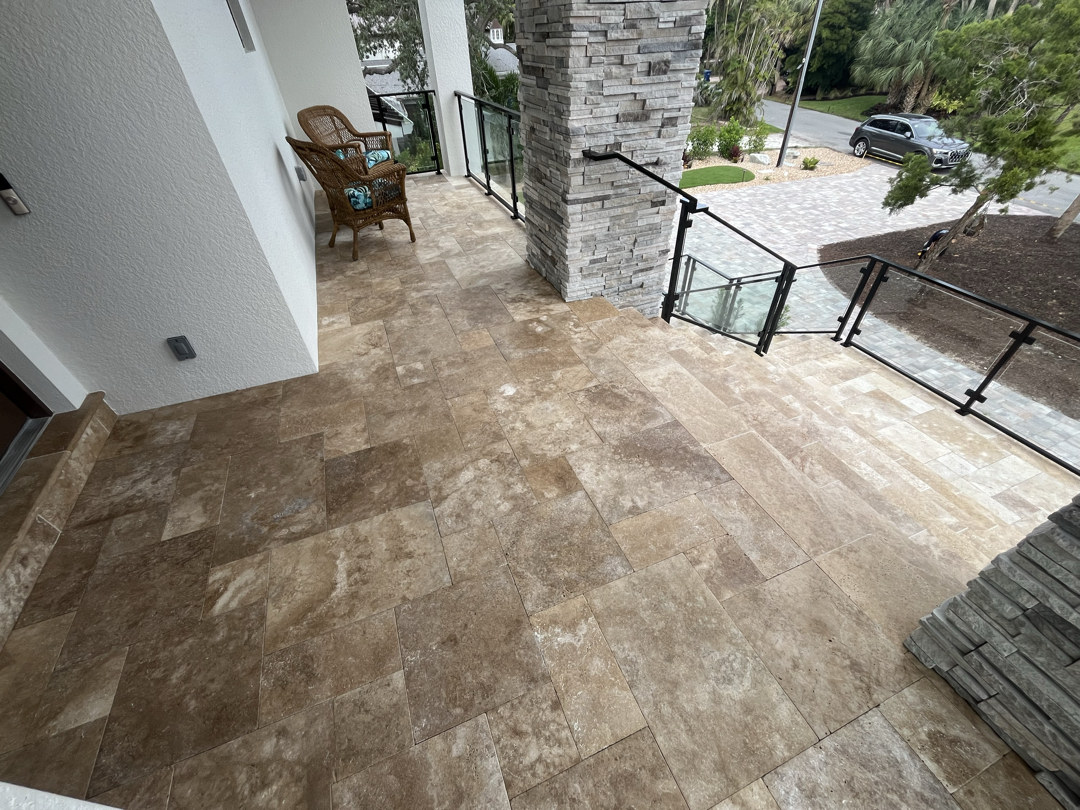
A Sarasota travertine pool deck can look beautifully finished when it is new, then slowly start showing the effects of real Florida use. A few darkened areas near the spa, irrigation rust along an edge, sunscreen residue around lounge chairs, and mildew in shaded sections can make natural stone look tired long before the rest of the home does. The right cleaning and sealing process protects the stone without covering up what makes travertine attractive in the first place.
Travertine is not brick paver and should not be treated like it. It is a porous natural stone with holes, veins, and color variation that give every deck or lanai its character. Sarasota travertine sealing needs to account for that porosity, the existing condition of the surface, and how the area is used – especially around pools.
Why Sarasota Travertine Sealing Is Different
Travertine absorbs water and contaminants more readily than many homeowners expect. On an uncovered patio or pool deck, rainwater carries dirt into the stone. Irrigation can leave mineral or rust staining. Pool water, salt residue, sunscreen, food spills, and landscaping debris all add to the wear. Florida sun can also dry out and fade the appearance of an unprotected surface over time.
Sealing does not make travertine maintenance-free, and it should not turn it into a coated tile floor. Its purpose is to reduce absorption, make routine cleanup easier, and help the stone hold a more even, cared-for appearance. On many Sarasota properties, a breathable impregnating approach is the better fit because it protects the pores without creating a thick film across the surface.
The best choice depends on the stone and the setting. A screened lanai with light foot traffic has different needs than a sun-exposed pool deck that sees daily use, water, and chemical residue. A good contractor starts by evaluating the material rather than applying the same sealer to every outdoor surface.
Start With Restoration, Not Just Sealer
Applying sealer over embedded grime, algae, old residue, or whitening from a failed coating does not solve the problem. It locks in the existing appearance and can make correction more difficult later. Proper Sarasota travertine sealing begins with preparation.
The surface should be cleaned using methods appropriate for natural stone. High pressure alone is not a restoration plan. Excessive pressure can roughen soft stone, open vulnerable areas, or push contaminants deeper into pits and pores. The goal is to remove surface soil, biological growth, and staining while preserving the natural finish of the travertine.
Problem areas may need more attention before sealing. Irrigation staining often requires targeted treatment. Poolside discoloration may involve calcium or chemical residue. White haze can indicate a topical sealer that has failed from moisture, UV exposure, or incompatible products. Each issue has a different cause, which is why a one-size-fits-all wash-and-seal package can produce disappointing results.
After cleaning, the stone needs adequate dry time. Sealing damp travertine can trap moisture or prevent the product from soaking in consistently. Drying time varies with weather, shade, stone density, recent rain, and whether the area is enclosed. In Southwest Florida, a contractor should watch actual site conditions instead of relying only on the calendar.
Choosing the Right Look for Your Home
Most homeowners want travertine to look clean, richer in color, and natural. That usually points toward a natural-look or lightly enhanced finish rather than a heavy sheen. The stone should still look like stone.
A natural impregnating sealer is often a strong option for pool decks and lanais. It helps resist water and stains while leaving the surface close to its original appearance. Depending on the product, it may provide a subtle color lift, but it should not create a plastic-looking layer or make the deck feel slick.
An enhancing sealer can deepen the stone’s tones and bring back some of the color lost to sun and weather. This can be a good choice where travertine has become dull but remains structurally sound. The trade-off is that enhancement is more noticeable, so it should be tested in a small area first. What looks great on a warm ivory travertine may feel too dark on a cooler beige or silver stone.
Outdoor travertine should not get a film coating. It can alter the natural look and get slick around a pool. If you want the stone richer, we use a color-enhancing impregnating sealer, with no film on top.
Pool Deck Conditions Need Extra Attention
A pool deck is one of the toughest environments for travertine. Chlorine, salt systems, splash-out, wet feet, furniture movement, and direct UV exposure all work on the surface. Even a well-sealed deck still needs sensible care.
Avoid leaving metal furniture feet directly against wet stone for long periods, since they can contribute to rust marks. Rinse away spills from drinks, food, sunscreen, and pool chemicals when possible. Keep nearby irrigation heads aimed away from the deck, especially if the water source leaves orange or brown mineral stains. These practical steps reduce the staining load before it becomes a restoration issue.
Traction also matters. Travertine is popular around pools in part because its texture and heat characteristics can be comfortable underfoot. The sealer should preserve that benefit, not compromise it. Any recommendation for a pool area should consider the stone’s existing texture, whether it is filled or unfilled, the level of shade, and how often the deck stays wet.
How Often Should Travertine Be Resealed?
There is no honest single answer for every Sarasota home. Exposure and use matter more than a generic schedule. An uncovered west-facing pool deck near landscaping may need attention sooner than a protected lanai with limited traffic. The quality of the original preparation and product application also makes a major difference.
Instead of waiting for the stone to look severely stained, watch for signs that protection is weakening. Water that once beaded may begin soaking in quickly. The surface may darken unevenly after rain. Routine spills may leave marks more easily, or the stone may simply look dry and harder to clean than it used to.
For many outdoor travertine surfaces, checking the condition every one to three years is sensible. That does not always mean the entire area needs a full reseal at the earliest point. A professional inspection can determine whether the sealer is still functioning, whether cleaning is enough, or whether the surface needs restoration and fresh protection.
Common Sealing Mistakes to Avoid
The most expensive mistake is sealing over an unknown existing coating. If the travertine already has a topical product, adding a new sealer without testing compatibility can lead to cloudiness, peeling, patchiness, or a white hazy appearance. This is particularly common when moisture becomes trapped under a failing film-forming sealer.
Another issue is using a product meant for dense manufactured pavers or interior stone. Travertine needs a sealer that works with porous natural stone and the outdoor environment. More product is not automatically better. Overapplication can leave residue, change the surface appearance, or create uneven areas that attract dirt.
Homeowners should also be cautious with aggressive acidic cleaners. Travertine is calcium-based stone, and harsh acid can etch or dull it. A stain treatment that works on concrete or brick can damage natural stone if it is not selected and used correctly.
What to Expect From a Professional Service
A material-specific travertine project should begin with photos or an on-site review of the deck, patio, walkways, or lanai. Useful details include whether the stone is around a pool, whether it has old sealer, the presence of white haze or staining, and the finish you want to maintain. Clear photos often allow a contractor to provide a written estimate and explain what the process is likely to involve.
The work itself typically includes cleaning, targeted stain or residue treatment where needed, drying time, and application of the selected sealer. Larger projects may be completed in sections to maintain clean edges and consistent coverage. Access, weather, furniture removal, and pool use should all be discussed before work begins.
Riverside Paver Sealing approaches natural stone with the understanding that the goal is not to make every surface look identical. A successful travertine restoration keeps the character of the stone visible while improving its protection and overall appearance.
If your travertine has lost its clean, even look, take a few photos in good daylight before choosing a product or scheduling a pressure wash. Those photos can reveal whether you are dealing with normal weathering, staining, a failed sealer, or a combination of all three – and they are the fastest starting point for getting the right work specified. Call (813) 406-0399, or request a free written estimate at https://www.riversideseal.com/free-estimate/.
See our Travertine Sealing, Marble Sealing, and Natural Stone Care pages for the same approach we use on outdoor stone.
For the south-area side of this work, see Sarasota paver sealing and Palmer Ranch, plus our travertine sealing page.
Leave a Reply